Showing posts with label moon. Show all posts

Saber's Beads (defocused)

A full limb of beads is not necessary to create these overlapping, smokey rings. Thicker crescents often have 2-3 beads at the tips that can be defocused for the "Saber's chain" effect. Of course, like Mardi Gras, the more beads the better. 


Saber Does The Stars: Astro Sims Gallery

saturn transits the sun (viewed from neptune)
*created with celestia*


Celestia planetarium software has saved my sanity on countless cloudy nights for both its accurate real-time sky display, and as a creative outlet to observe rare and/or currently spaceflight-limited events by virtually traveling across time and space. The vids and clips to this gallery and more can be found at http://www.youtube.com/@saberzastrovidz . Enjoy!

[all images are free use with author/website acknowledgement]


also see

http://www.youtube.com/@saberzastrovidz http://www.tinyurl.com/c14isawesome http://www.tinyurl.com/saberdoesthestarz related searches: astronomical league, hubble's caldwell catalogue, messier-caldwell marathon, m-cubed, messier marathon from memory, deepsky lists/concordiem borealis, c14 is awesome, saber's beads, stephen saber, saberscorpx, saber does the stars


* * * * *


2025-2026 Lunar X Timings


2025 Jan 06 1714 UT
Feb 05 0813 UT
Mar 06 2254 UT
Apr 05 1247 UT
May 05 0135 UT
Jun 03 1320 UT
Jul 03 0015 UT
Aug 01 1047 UT
Aug 30 2126 UT
Sep 29 0846 UT
Oct 28 2109 UT
Nov 27 1045 UT
Dec 27 0123 UT

2026 Jan 25 1632 UT
Feb 24 0731 UT
Mar 25 2144 UT
Apr 24 1050 UT
May 23 2244 UT
Jun 22 0941 UT
Jul 21 2005 UT
Aug 20 0630 UT
Sep 18 1731 UT
Oct 18 0537 UT
Nov 16 1901 UT
Dec 16 0935 UT

           
*timings courtesy of Dana Thompson*
*photo credit: frostydew.org*

UT to local time conversion:

saber does the stars at:

all contents within are free use with author/website acknowledgement

*****

Saber's Beads: Evolution


Saber's Beads: Evolution
by J. Sorenson

"The broken arc of lights eclipse contact resemblance peaked in deep twilight with the infant crescent moon hanging 5° above the horizon on a steep ecliptic at a solar elongation of 12.2°. By this time I was fully immersed in the imagery of a total solar eclipse- as if in the next few moments I would either be basking in our sun's corona or forced to turn away from its glare. Low altitude scintillation added a surreal dynamic to the experience." -Stephen Saber (May 2006)
After his related comment on this young moon sighting, the described visual aspect was almost immediately dubbed "Saber's Beads" by his peers, and gained popular use by other lunar observers and websites.
The term has since continued to virally spread to other cultural venues as well, including:

Existential: SouledOut (2007)
Saber's Beads is represented as symbolic of increased perspective and open-mindedness.

Life Experience: Blogger (2009) The author's blog titled Saber's Beads documents her own personal uplifting experiences as 'staggered brightness peaks' along life's journey.

Literature/Fiction: Cailyn Vature's 'Raven' (2009) Saber's Beads initiate a fabled window of time surrounding new moon that allows those souls in limbo to return to earth.

Music: Sophie Hutchings (2012)
Saber's Beads is released as an instrumental classical piano track appearing on her album 'Night Sky'.

Nature: (Faulkner 2014) A breed of flower is officially catalogued as Saber's Beads due to characteristic random bright patches at the petal tips.

Gaming: Perfect World (2015)
Saber's Beads is introduced as a powerful defensive weapon sought to be collected during play.

Sports: Horse Racing/TabGold (2015) The 3-year old racehorse, named Saber's Beads, takes 3rd place in his first appearance at Scottsville Downs.

Jewelry: Lunerias Luneras (2016) 
The Saber's Beads necklace is introduced, featuring detached points of brightness and color.

Music: Malakai (2018) Dance/electronic track Saber's Beads released from the album Soros.

Art/Literature: (2018) Graphic novel Saber's Beads created by artist/writer Melody Borg.

Quotable/Meme (YouQuote.in): Saber's Beads mentioned in inspirational quote by writer Incognito.

Baby Names (Reddit): Young couple notes naming their firstborn Saber after the rare lunar phenomenon.

Art/Paintings: (2019) French artist Joyce Billet creates the Saber's Beads collection of oil paintings inspired by the 'duality between dark and light alluding to an eclipse' and 'the relationship between nature and humanity.

Even with Saber's passionate forte for popularizing the night sky, this level of 'outreach gone wild' was an unexpected bonus, and he mentions being especially pleased that the epiphany-related term had not remained confined to the world of astronomy.
For a chance to experience the astronomical Saber's Beads the equipment requirements are as simple as the sighting conditions are serendipitous. Standard binoculars provide the minimum magnification. However, the necessary logistics and sky conditions to follow an extremely young lunar crescent down to a clear horizon (or an extremely old crescent up from the horizon) while still in deep twilight are few and far between. But for those who persevere Saber's Beads remains a beautiful sight not to be missed.

[reprinted with permission/J. Sorenson, KSCA Meridian June 2019]


Saber's Beads (raw image credit: maurice collins/ltvt

* * * * *

http://saberdoesthestars.wordpress.com
http://c14isawesome.blogspot.com
http://saberscorpx.vidmeup.com


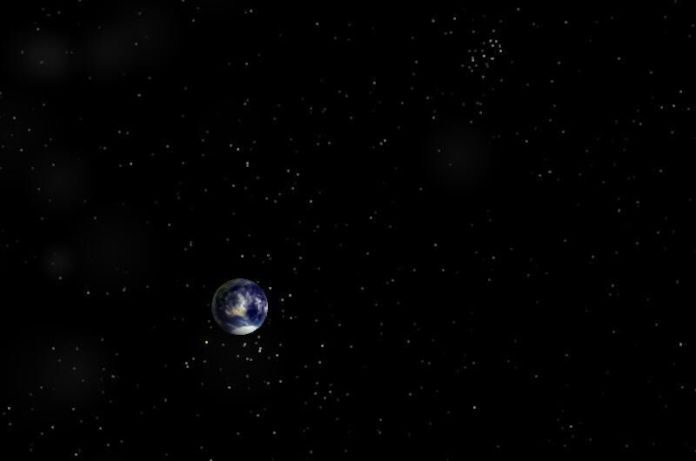
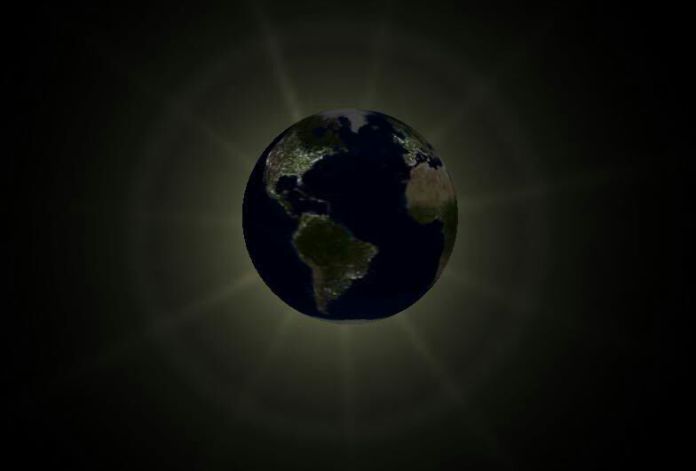
sitting in plato: earth viewed from the moon

simulated pics of earth as seen from the lunar crater plato *created with celestia*


earth occults the pleiades (m45)


earth passes the hyades (caldwell 41)


earth occults saturn


earth occults mars


earth occults sol (total solar eclipse)


a total solar eclipse from earth is seen as a shadow transit from the moon


full shadow transit vidclip at
http://www.saberscorpx.vidmeup.com


* * * * * 

http://c14isawesome.blogspot.com
http://saberdoesthestars.wordpress.com


Extreme Crescent Hunting

Saber's Beads: The 'string of pearls' illuminated arc of lunar peaks prior to the first complete crescent. Note the striking resemblance to the moments before and after a total solar eclipse. (27 may 2006. age +20.1 hrs. raw image credit: maurice collins/ltvt)


The moonrise before and moonset after each New Moon offer stargazers the opportunity to view the thinnest lunar crescents. There are many websites and apps that provide exact moonrise/set data for any location. Here are some additional tips to maximize your chances of sighting our very young (or old) moon.

Set up at a site with as much altitude as possible overlooking an unobstructed horizon. 
Optimal sky transparency allows the crescent to be detected and tracked down to, or up from, the horizon. 
Using a telescope or binoculars (mounted binos are recommended), fine tune the focus on Venus, Jupiter, or one of the brighter stars beforehand. 
For dusk attempts, have Sol’s setting azimuth on hand- making note after sunset of a random landmark at that position for reference- as well as Luna’s altaz position at sunset thru moonset. Accordingly, for dawn attempts, have Luna’s altaz info for moonrise thru sunrise. 
As dawn slivers have the advantage of possible detection with dark-adapted eyes, wearing sunglasses during the day prior to sunset attempts is recommended for maximum ‘dusk’ adaptation. 
Once the crescent is acquired in binoculars, walk the bino down to the horizon/random landmark in consecutive FOVs for the approximate naked-eye altaz. 
A favorable elongation is important. In the 24 hours before or after New Moon, Luna’s angular separation from Sol can vary by several degrees. With a favorable ecliptic, net elongations (as altitude) of 6° or more at sunset or moonrise offer the best window for detection. 
Observers nearer to the equator than the poles enjoy a much greater frequency of steep ecliptics. 
Illuminated fractions of same-age crescents within 24 hours of New Moon can vary by 200% and a full magnitude of brightness due to distance, libration, and sun angle. Slivers near perigee help present a thicker and brighter lunar profile for personal record crescent spotting. 
Last but not least, don’t always count-out a shallow ecliptic. Occasionally our moon’s extreme northern or southern declination will compensate for a less than favorable ecliptic angle.

BRACKETING THE SLIVERS

Another rare and challenging notch for ones lunar bedpost is to catch the consecutive waning and waxing crescents within 24 hours on each side of New Moon.
For example, the July 2008 Buck Moon offered such an opportunity as I was able to spot both the -16.5 hour illumination before sunrise on the 2nd and the +23.5 hour sliver just after sunset on the 3rd.
Clean horizons for both windows is a gift in itself.

SABER'S BEADS

The 'holy grail' of extreme crescent hunting is to catch the segmented arc of illuminations occurring before and after the first and last complete crescent. 
Personal research of 100+ sighted thin crescents (at 2% or less illumination) and several hundred simulations indicate additional favorable parameters to sight this aspect include that our moon ideally be revealing a 1.4% or less illumination while traveling on a neutral or northern ecliptic declination, while also showing a strong south and east libration.
It's a rare alignment of cycles, but the visual aspect can now be more realistically simulated and predicted with the advancement of LRO-based programs and apps. 
On the plus side, the full necklace of Saber's Beads can potentially be sighted on crescents within about 30 hours of New Moon (within 20-24 hours generally provides the most beading observable in a darker/deep twilight sky).

[exerpt from Saber Does The Stars by Stephen Saber]
http://c14isawesome.blogspot.com
http://saberdoesthestars.wordpress.com
http://saberscorpx.vidmeup.com

* * * * *


waning interest: hunting the oldest crescent moon

if you're into chasing thin crescents and not taking advantage of the waning slivers, you're missing half of the challenge and rewards. dawn crescents don't get nearly the attention of their dusk counterparts. there is no cultural significance and most of the world is still asleep. this is unfortunate as oldest crescents usually enjoy cleaner, steadier air, and observers already have a jump on dark adaptation. catching the thin horn of luna's limb emerging from the horizon can also be an addictive twist to the dusk event. the still of the night also lends itself to creating a more peaceful and contemplative experience.
double your pleasure, practice, and conquests- support your oldest crescents.

peace, stephen

*****

tinyurl.com/saberdoesthestarz
tinyurl.com/c14isawesome

Quick and Dirty Binocular Mag Comparisons

by stephen saber

first, a couple for lady luna. couldn't decide which one i liked better.
top one has a pac-man thing going on.
for image scale purposes only. resolution increases proportionately 
in higher mag noks.


m45/pleiades 


c14 is awesome!


*****
also see